
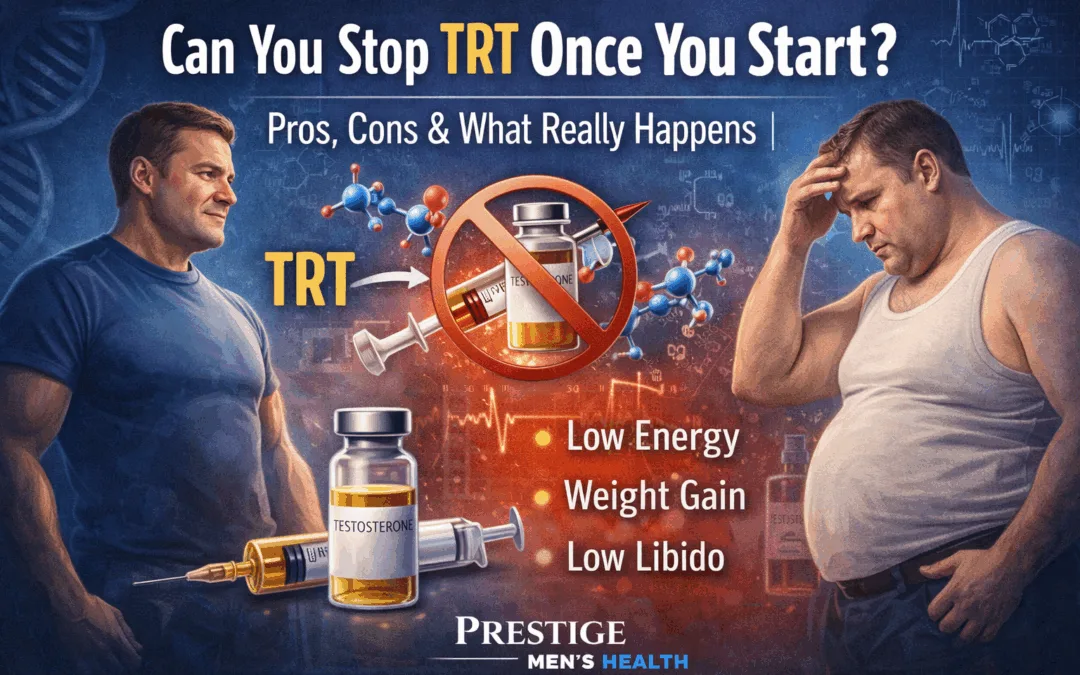
Can You Stop TRT Once You Start? Pros, Cons & What Really Happens
Introduction
One of the most common questions men ask before starting testosterone therapy is simple but important:
“Can you stop TRT once you start?”
The short answer is yes — testosterone replacement therapy can be stopped at any time. However, what happens after stopping TRT depends heavily on why your testosterone was low to begin with, how long you were on therapy, and whether any recovery plan is in place.
This article explains what happens when you stop TRT, who may be able to discontinue safely, what recovery looks like, and how to minimize unwanted side effects.
What Happens to Your Body When You Stop TRT
- Testosterone Levels Decline Rapidly
When you stop testosterone injections or other forms of TRT, blood testosterone levels typically fall back toward baseline within 2 to 6 weeks.
If your natural testosterone production was already low before starting TRT, levels will usually return to those same low numbers after stopping. TRT does not permanently “fix” testosterone deficiency on its own.
- Symptoms Often Return
As testosterone levels drop, many men notice symptoms returning quickly. Common effects include:
Low energy and motivation
Reduced libido
Erectile dysfunction
Mood changes or irritability
Brain fog and poor focus
Increased fatigue
Loss of strength and muscle mass
For many men, symptoms begin to reappear within 1 to 4 weeks after stopping TRT.
- Natural Testosterone Production May Be Suppressed
While on TRT, your brain reduces signaling to the testes by lowering luteinizing hormone (LH) and follicle-stimulating hormone (FSH). This is a normal feedback response.
After stopping TRT, the body must restart this signaling process. Some men recover natural testosterone production over time, while others do not — especially if the original cause of low testosterone was medical or age-related.
Who Can Safely Stop TRT?
Men With Lifestyle-Related Low Testosterone
Some men experience low testosterone due to reversible factors such as:
Chronic stress
Poor sleep
Excess body fat
Inadequate nutrition
Overtraining or burnout
If these contributors are addressed, natural testosterone production may rebound after stopping TRT. These men are the most likely to recover without long-term therapy.
Men With Medical or Age-Related Hypogonadism
Men whose low testosterone is caused by:
Primary testicular failure
Genetic conditions
Pituitary or hypothalamic dysfunction
Age-related hormonal decline
are much less likely to recover normal testosterone levels after stopping TRT. In these cases, testosterone therapy is often a long-term or lifelong treatment.
Post-TRT Therapy (PCT) and Recovery Options
Some men use post-TRT recovery medications to help restart natural hormone production and reduce symptoms after stopping testosterone.
Common options include:
Clomiphene (Clomid)
Enclomiphene
hCG (human chorionic gonadotropin)
These medications stimulate the body’s natural hormone pathway and may help increase LH and FSH production, supporting testosterone recovery.
A provider can determine whether post-TRT therapy is appropriate based on labs, symptoms, and treatment history.
Why Do Men Choose to Stop TRT?
Men stop TRT for many reasons, including:
Planning to conceive
Lifestyle or travel challenges
Frustration with dosing or symptom control
Financial considerations
Transitioning to a different provider
Stopping TRT is not dangerous when done correctly. The primary issue is the return of symptoms if testosterone remains low.
Pros of Stopping TRT
Possible recovery of natural testosterone production (in select cases)
No ongoing injections or medications
Potential improvement in fertility
Ability to reassess baseline hormone levels
For men with lifestyle-driven low testosterone, stopping TRT can be a reasonable step under medical supervision.
Cons of Stopping TRT
Rapid return of low testosterone symptoms
Decreased energy, strength, and endurance
Mood instability or irritability
Reduced libido and sexual performance
Overall decline in quality of life
Many men who discontinue TRT eventually restart treatment once symptoms interfere with daily functioning again.
How to Stop TRT Safely
TRT should never be stopped abruptly without medical guidance. A safe discontinuation plan often includes:
Reviewing current lab work
Considering post-TRT recovery medications
Optimizing sleep, nutrition, and stress levels
Tracking symptoms closely
Rechecking testosterone levels after 8–12 weeks
A structured approach helps reduce the severity of symptoms and improves the chance of recovery when possible.
If you’re thinking about stopping testosterone therapy, it’s important to do it safely and strategically. A personalized plan can help protect your health and hormone balance.
Book a consultation to discuss your options and next steps.